what happens to a donated heart after recipient dies
What happens to your torso when y'all're an organ donor?
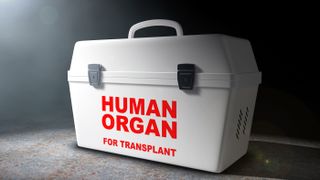
With organ donation, the death of ane person can atomic number 82 to the survival of many others. But when a donor dies, how do doctors save their organs for transplantation?
"In guild to be an organ donor, you have to be in a infirmary, on a ventilator, and have some type of neurologically devastating injury," said Heather Mekesa, the Main Operations Officer of Lifebanc, Northeast Ohio's organ procurement organization.
At that place are two ways that this can happen: brain decease and cardiac death. Cardiac death occurs when the patient has such severe brain damage that they would never make a full recovery. This impairment can be to different parts of the brain. They may have a small amount of brain functionality, but the physician determines that they will never be able to recover. The donor is only kept live by a ventilator, which their family unit may choose to remove them from. This person would be considered legally expressionless when their center stops beating.
Related: How long can organs stay outside the body before being transplanted? (opens in new tab)
Almost donated organs come up from cases of brain death, in which the donor has no encephalon function, co-ordinate to a 2020 study in the journal BMJ Open. This patient has irreversible loss of part of all regions of the encephalon, including the encephalon stem. A doctor diagnoses a person as "brain dead" when that patient is in a coma, has no brain stem reflexes, and fails an apnea exam that serves to show if all brain stem function has been lost. A person who is brain dead is legally dead, fifty-fifty if they are even so breathing with a ventilator. The physician, not the organ transplant team, makes that phone call.
While the donor'due south trunk is kept alive through life support, the organ procurement team tests whether their organs are safe for transplantation. If the donor has cancer or an infection such every bit COVID-19, their organs may not exist usable, but not all diseases preclude organs from being used. For case, an HIV-positive donor can donate to an HIV-positive recipient. "They are transplanting organs on a regular ground that are hepatitis A-, B-, C- positive," Mekesa added.
Routine blood tests can reveal whether organs such as the liver and kidneys are salubrious. The organ procurement team sometimes inspects the donor'south heart for damage or blockage by sticking a thin tube into an avenue or vein and threading information technology through their blood vessels to the heart. The team can too utilise a chest X-ray to evaluate the lungs for size, infection, or signs of disease. They may do farther testing past sticking a thin tube into the lungs to farther evaluate infection and determine if antibiotics are needed. Brains are never transplanted, merely all other organs tin can be donated in the instance of encephalon death; in the case of cardiac death, the heart is likely too damaged to donate, according to the 2020 report.
Later on testing the organs, the organ procurement team finds and confirms recipient matches from the national transplant waiting list. The recipient's surgeons ready a time to meet and wing to the donor. Depending on how many organs are being donated, "you might be organizing surgeons from three to 4 states," Mekesa told Alive Science.
In the case of encephalon death, the doctors start to recover the organs by clamping the circulatory system to stop the ventilator from pumping blood effectually the body. In the instance of cardiac expiry, they remove the ventilator and await until the middle stops beating, which tin can accept anywhere from about a half hour to 2 hours, and so an additional 5 minutes to ensure the donor's heart doesn't spontaneously restart, Mekesa said. The surgeons may decide non to recover the organs if information technology takes also long for the heart to stop and the other organs brainstorm to die. For both types of organ donors, the surgeons then bleed the donor'southward organs of blood, refill them with a cold preservation solution, and remove the organs.
The surgeons fly the organs back to the recipients and begin the transplantation. They must human action rapidly; the center and lungs can concluding four to half dozen hours exterior the trunk, the pancreas 12 to 24 hours, the liver up to 24 hours and the kidneys 48 to 72 hours, co-ordinate to the Health Resource and Services Administration (HRSA). Meanwhile, the donor's trunk, with organs removed, is prepared for a funeral or other memorial service.
Organ donation saves lives, but not enough. Each day, xx people dice waiting for a transplant in the U.South., according to the HRSA. Although 90% of adults in the country support organ donation, only 60% are registered donors. Fifty-fifty those who have signed up may meet issues with donation if they haven't made their wishes clear to their family. "The biggest claiming that we face when we meet with families is them saying, 'I don't know what they want to do. Nosotros never had this conversation,'" Mekesa said.
Originally published on Alive Science.
bernardreptereard1941.blogspot.com
Source: https://www.livescience.com/what-happens-to-organ-donor-body.html
0 Response to "what happens to a donated heart after recipient dies"
Post a Comment